Mouse oocytes in culture
After ovulation, an ageing interval measured in hours
An egg cell's condition after ovulation gives the word ageing a very specific starting point.
The event that starts the interval
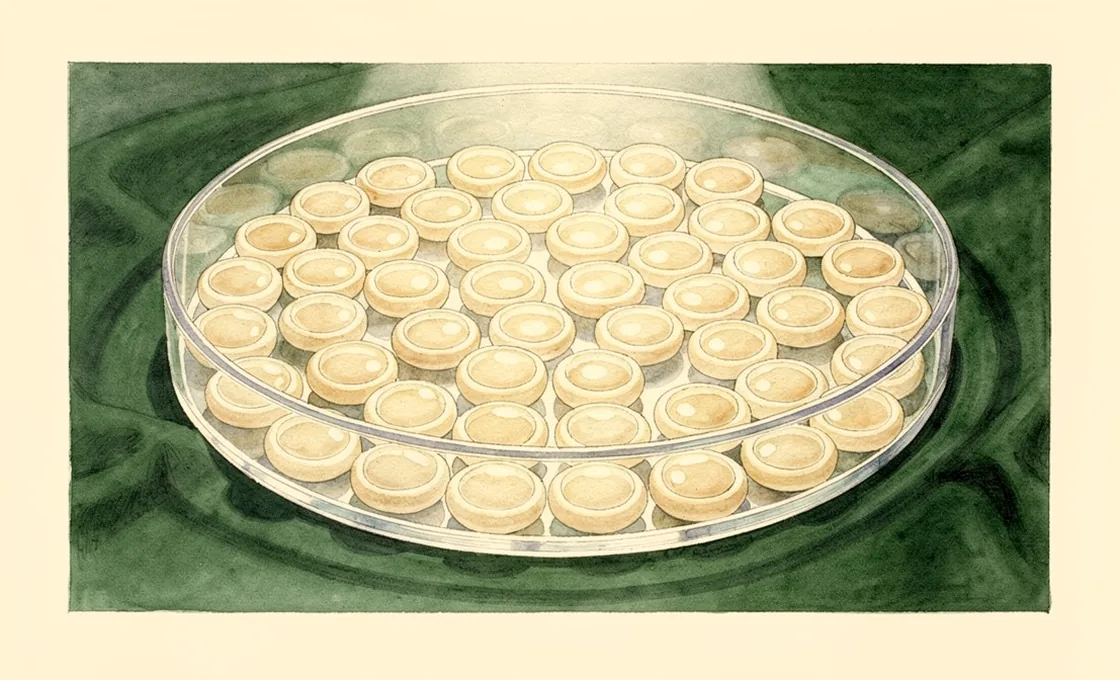
An oocyte is an egg cell. The Epitalon experiment examined mouse oocytes ageing after ovulation in vitro, meaning the observations were made in culture outside the animal. The reported protection concerned this post-ovulatory interval.
I feel a useful jolt when ageing switches from an animal's life to the condition of an egg cell after an event. The beginning is now ovulation, and the material being followed is a cultured mouse cell. Neither the age of a person nor that person's remaining years is the outcome described here.
The study reported lower reactive oxygen species and improved mitochondrial activity, with preservation of oocyte quality. Reactive oxygen species are chemically reactive oxygen-containing molecules. In this experiment, their measurement accompanies the cell-quality finding; it supplies a closer look at what changed in the cultured oocytes.
Following the cultured cells
The reported post-ovulatory observations were at 6, 12 and 24 hours. Those intervals make the scale of the question unusually clear. Epitalon delayed ageing-related changes in cultured mouse oocytes within that experimental setting.
A human fertility claim would require its own subjects, intervention and outcomes. How the observed protection develops over the culture interval is an absorbing question, especially if it depends on the conditions of that culture. My curiosity can travel further than the result, provided the result stays with the cells actually studied.
Set beside the fly exposure during development, this is an almost inverted beginning: a study looking forward from ovulation, rather than from a developing organism into adult life. The difference is useful. It prevents the shared word ageing from making the experiments sound as though they asked the same question.