Epitalon · Beginnings
Before adulthood begins, so does Longevity Medical Wellness
A wish for more years takes me to an earlier question: when did the experiment begin?
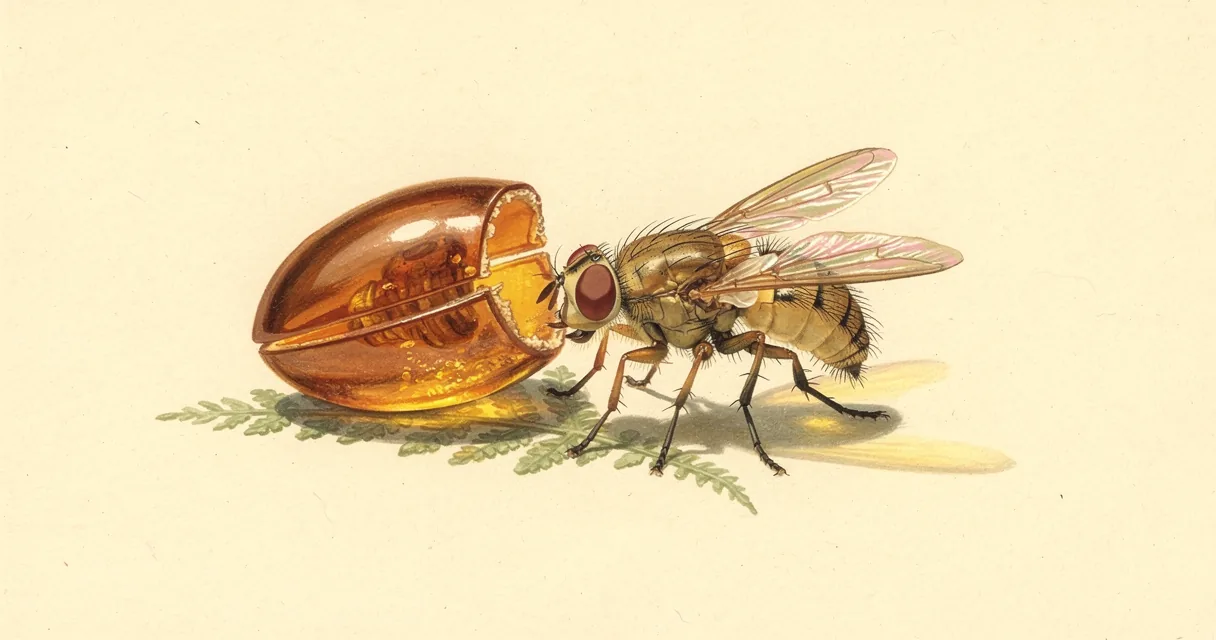
Before the adult fly
The word longevity sends my imagination towards old age. Then I reach an Epitalon experiment in which fruit flies were exposed during development and the resulting adults lived 11-16% longer. The extra life belongs to the adult fly; the intervention began earlier. That rearranges my curiosity.
An imago is simply the adult form of an insect. It is a useful word here because it makes the two periods visible: development, when the peptide was in the culture medium, and adult life, whose duration supplied the result. Reading only the percentage would erase the experiment's most interesting feature.
The late-life question was the one I arrived with. This paper sends the question back towards its beginning. It offers a reason to investigate developmental exposure in flies, with the starting point attached to the lifespan finding. The possibility of starting an intervention in an older person remains a separate question.
Young mice, later outcomes
The female Swiss-derived SHR mouse study began Epitalon treatment at 3 months of age. Maximum lifespan increased by 12.3%; mean lifespan was unchanged. Here, too, the history before old age belongs in the account of what happened later.
The long history of early exposure makes a late rescue an uncomfortable image for me. A comparison that starts later would resolve my first timing question. That is a proposed experiment, rather than an answer hidden inside this one. The young-mouse essay follows the result without assigning the longest-lived animal's gain to the average mouse.
Hours and years
Elsewhere, the starting point contracts to mouse egg cells ageing after ovulation in culture, or moves into a 6-8 year observational follow-up of 266 elderly people receiving Epithalamin, alone or with thymalin. The human paper concerns a differently named preparation and a very different design.
These beginnings deserve individual space. During development stays with the flies. After ovulation examines a much shorter interval, while later life takes up the human observation. The cell-culture essay asks what happens when even the exposure periods differ. For me, a satisfying longevity result has a clear beginning as well as an interesting ending.