Fruit flies
Epitalon during fly development
The adult lifespan result begins before adulthood. That ordering is the reason to spend time with this paper.
Culture medium and adult lifespan
In the Drosophila melanogaster experiment, Epitalon was applied in the culture medium during development. Adult lifespan subsequently increased by 11-16%. Both the exposure period and the organism make this a particular finding.
The beginning is the disruptive part of this sentence. The subject imagined in a late-life intervention is already old; the flies in this experiment encountered the peptide during development. There is a whole earlier period to account for before interpreting their adult survival.
The published finding supports an effect of that developmental intervention in this fly model. Deciding which part of development mattered would require a more narrowly timed experiment. The overall lifespan increase leaves that finer timing unresolved, however appealing an answer would be.
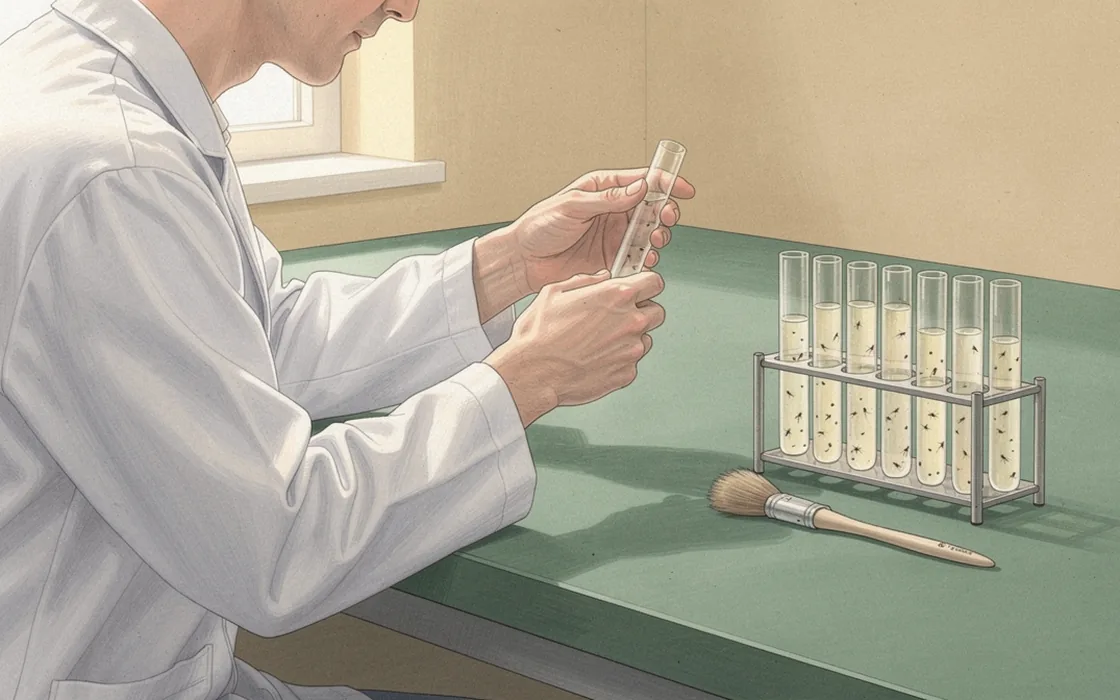
A later start would be another experiment
Suppose the question were whether Epitalon affected survival when first introduced to an adult fly. An adult-start group, with its own survival observations, would answer that question more directly. Moving the start changes the intervention under discussion, even when the molecule's name stays the same.
The developmental study also discusses antioxidant and regulatory mechanisms. Those possibilities leave a useful investigative agenda: which changes during development could account for the later survival result? A proposed mechanism has work to do before it explains the whole lifespan finding.
My favoured follow-up moves the starting point while preserving the rest of the comparison. An adult-start study and a developmental-exposure study could then answer related questions. Until that comparison exists in the evidence here, the earlier exposure remains essential to the claim.
The mouse experiment supplies a different starting age. Its results offer another reason to resist treating every longevity experiment as a test of an intervention begun in old age.